
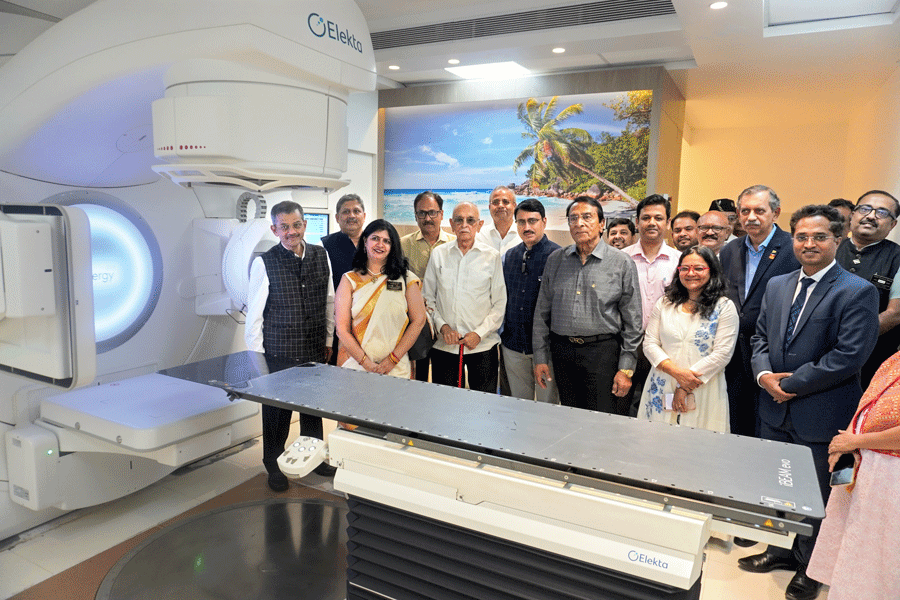
A ₹4.2-crore CSR-funded initiative facilitated by Rotary Foundation (India) has brought together a Rotary club, a cancer research centre and a private hospital to expand access to advanced cancer treatment in Maharashtra.
For thousands of cancer patients, access to treatment is determined not only by the availability of medical technology but also by whether they can afford it.
In Pune, where patients from across Maharashtra seek specialised cancer care, the cost of radiation therapy has remained a significant barrier for economically disadvantaged families. Recognising this gap, Rotary Club of Pune Pristine, in partnership with the Integrated Cancer Treatment and Research Centre (ICTRC), Wagholi, and Onco-Life Hospitals, has helped establish a state-of-the-art Radiation and CT Scan Centre to make advanced cancer treatment more accessible.
Facilitated through a ₹4.2-crore Corporate Social Responsibility (CSR) grant from Rotary Foundation (India), the initiative brings together healthcare institutions, Rotary’s community network and corporate support to strengthen cancer treatment infrastructure.
A partnership to expand access to cancer care
The new centre was inaugurated in April 2025 at ICTRC, Wagholi, an eastern suburb of Pune. It is the result of a collaborative model involving Rotary Club of Pune Pristine, ICTRC and Onco-Life Hospitals, which has enabled the installation of medical assets and treatment facilities worth approximately ₹12 crore at the hospital.
The centre is equipped with advanced radiation therapy and CT scanning technology, enabling patients to access diagnosis and treatment at a single facility. It is designed to cater to patients across age groups, including children and adults.
At full capacity, the centre can provide radiation therapy to approximately 1,200 patients annually, with at least 80 per cent of patients expected to be from economically disadvantaged backgrounds. This will significantly expand the hospital’s earlier capacity of treating around 400 radiation therapy patients annually.
Making advanced treatment affordable
The need for such an intervention is considerable. According to project estimates shared by Rotary Club of Pune Pristine, thousands of patients visiting Pune each year require radiation therapy as part of their cancer treatment. However, the cost, estimated at ₹1.5–2 lakh per patient, places it beyond the reach of many families.
The new facility aims to bridge this gap by expanding access to free and affordable treatment, including through government healthcare schemes such as Ayushman Bharat and the Mahatma Jyotiba Phule Jan Arogya Yojana.
The partnership also extends beyond medical infrastructure. Patients referred from government and charitable hospitals will have access to transport facilities, while meals for patients and one accompanying caregiver will be provided during treatment. Medical kits to help manage common side effects of radiation therapy are also planned.
Rotary’s role in building sustainable healthcare infrastructure
For Rotary Club of Pune Pristine, the new centre is part of a larger commitment to improving access to affordable cancer care.
Since 2020, the club has been working to develop a network of hospitals offering free or subsidised treatment to underserved patients. Through partnerships with healthcare institutions and support mobilised through Global Grants, CSR funding and other contributions, the initiative has helped expand access to specialised facilities, including radiation centres, chemotherapy wards, intensive care units and operating theatres.
The club’s medical projects convener, Sudin Apte, has been instrumental in developing this network and bringing institutional partners together.
The partnership with ICTRC and Onco-Life demonstrates how Rotary can facilitate collaborations that combine corporate resources, medical expertise and community-level engagement to address critical healthcare needs.
By strengthening cancer care infrastructure and expanding access to advanced treatment, the project is helping ensure that a patient’s ability to afford care does not become an insurmountable barrier to treatment.